

When to Trust the Machine
AI is helping leaders make decisions faster, and in some cases, more accurately. But speed is not the same as wisdom, and accuracy is not the same as judgment. Effective leaders know when to trust the machine, when to trust the room, and when to trust their instincts. Each source of guidance has strengths, and each has blind spots. The challenge is knowing which one deserves the final say in a given situation.

Facts don’t move people—peers do
In a data-driven world, it’s tempting to believe that providing rock‑solid facts will prompt people to change their attitudes and behaviors. But research tells a different story: people change because of people—especially peers, friends, and colleagues.

The Human Edge
AI is transforming not only how we work, but also how we lead. While AI can increasingly handle data analysis, pattern recognition, and decision-making at superhuman speed, core leadership capabilities remain deeply human—and are more critical than ever. Put simply, machines stumble where empathy, ethics, and intuition hold sway—that is, in almost any situation where people work together toward a shared goal.
-
When to Trust the Machine
AI is helping leaders make decisions faster, and in some cases, more accurately. But speed is not the same as wisdom, and accuracy is not the same as judgment. Effective leaders know when to trust the machine, when to trust the room, and when to trust their instincts. Each source of guidance has strengths, and each has blind spots. The challenge is knowing which one deserves the final say in a given situation.
-
Facts don’t move people—peers do
In a data-driven world, it’s tempting to believe that providing rock‑solid facts will prompt people to change their attitudes and behaviors. But research tells a different story: people change because of people—especially peers, friends, and colleagues.
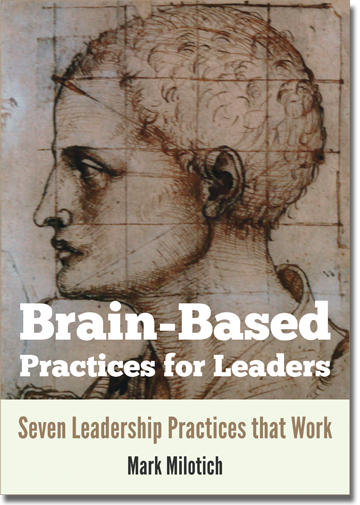
Chock full of the latest brain science to explain not just what you should do to be a great leader & manager but importantly—WHY.
Well thought out and researched, brilliantly structured and with great and positive advice.
Great read, direct and to the point. No fluff. Great for reference.
Interesting read. Simple approach.

The illusion of correlation
Our brains are wired for pattern recognition. It’s an evolutionary trait that helped our ancestors survive (rustling grass = possible lion). Our ancestors rarely came to harm through false positives (they thought it was a lion, and it wasn’t), whereas the price for failing to recognize a link was high. Better to err on the side of caution than become lunch.

From Setback to Strength
Every leader faces moments that feel like a roadblock, when a crisis threatens to halt progress. However, these moments often look quite different with the benefit of hindsight. When viewed from the right perspective, what feels overwhelming now can become a turning point—sparking growth, innovation, and renewed commitment. As Carol Dweck puts it, “The view you adopt profoundly affects how you lead your life.”

The Tom Sawyer Method
In Mark Twain’s classic, Tom Sawyer convinces his friends to help him paint the fence—in fact, they beg Tom for the privilege of painting the fence—while he relaxes and eats an apple. Tom uses several influence strategies to influence his friends. To get someone to do what you want, find ways to increase value, decrease risk, and/or reduce cost from their perspective.

Breaking Through the Local Optimum Trap
In today’s volatile business environment, the greatest risk isn’t making the wrong choice—it’s settling for merely good enough. Organizations (and individuals) often mistake incremental success for optimal performance, locking onto strategies that deliver steady results but miss transformational opportunities.

Setting Goals? Get an Attitude!
“Alea iacta est” (the die is cast) Julius Caesar is claimed to have said as he led his army across the Rubicon River in northern Italy in 49 BC, effectively declaring war against the forces of General Pompey. There was no turning back. In a similar, though less dramatic way, we all cross a point of no return every time we decide to take action to achieve a goal.

I Will—The Power of Public Commitments
You can influence a person’s future behavior by asking for a commitment and then waiting for them to give it. Making a commitment, however small, puts “skin in the game.” People want to act in ways that are consistent with what they have already said or done.
-
The Human Edge
AI is transforming not only how we work, but also how we lead. While AI can increasingly handle data analysis, pattern recognition, and decision-making at superhuman speed, core leadership capabilities remain deeply human—and are more critical than ever. Put simply, machines stumble where empathy, ethics, and intuition hold sway—that is, in almost any situation where people work together toward a shared goal.
-
The illusion of correlation
Our brains are wired for pattern recognition. It’s an evolutionary trait that helped our ancestors survive (rustling grass = possible lion). Our ancestors rarely came to harm through false positives (they thought it was a lion, and it wasn’t), whereas the price for failing to recognize a link was high. Better to err on the side of caution than become lunch.
-
From Setback to Strength
Every leader faces moments that feel like a roadblock, when a crisis threatens to halt progress. However, these moments often look quite different with the benefit of hindsight. When viewed from the right perspective, what feels overwhelming now can become a turning point—sparking growth, innovation, and renewed commitment. As Carol Dweck puts it, “The view you adopt profoundly affects how you lead your life.”
-
The Tom Sawyer Method
In Mark Twain’s classic, Tom Sawyer convinces his friends to help him paint the fence—in fact, they beg Tom for the privilege of painting the fence—while he relaxes and eats an apple. Tom uses several influence strategies to influence his friends. To get someone to do what you want, find ways to increase value, decrease risk, and/or reduce cost from their perspective.
-
Breaking Through the Local Optimum Trap
In today’s volatile business environment, the greatest risk isn’t making the wrong choice—it’s settling for merely good enough. Organizations (and individuals) often mistake incremental success for optimal performance, locking onto strategies that deliver steady results but miss transformational opportunities.
-
Setting Goals? Get an Attitude!
“Alea iacta est” (the die is cast) Julius Caesar is claimed to have said as he led his army across the Rubicon River in northern Italy in 49 BC, effectively declaring war against the forces of General Pompey. There was no turning back. In a similar, though less dramatic way, we all cross a point of no return every time we decide to take action to achieve a goal.