

Breaking Through the Local Optimum Trap
In today’s volatile business environment, the greatest risk isn’t making the wrong choice—it’s settling for merely good enough. Organizations (and individuals) often mistake incremental success for optimal performance, locking onto strategies that deliver steady results but miss transformational opportunities.

Setting Goals? Get an Attitude!
“Alea iacta est” (the die is cast) Julius Caesar is claimed to have said as he led his army across the Rubicon River in northern Italy in 49 BC, effectively declaring war against the forces of General Pompey. There was no turning back. In a similar, though less dramatic way, we all cross a point of no return every time we decide to take action to achieve a goal.

I Will—The Power of Public Commitments
You can influence a person’s future behavior by asking for a commitment and then waiting for them to give it. Making a commitment, however small, puts “skin in the game.” People want to act in ways that are consistent with what they have already said or done.

From Setback to Strength
Every leader faces moments that feel like a roadblock, when a crisis threatens to halt progress. However, these moments often look quite different with the benefit of hindsight. When viewed from the right perspective, what feels overwhelming now can become a turning point—sparking growth, innovation, and renewed commitment. As Carol Dweck puts it, “The view you adopt profoundly affects how you lead your life.”

The Tom Sawyer Method
In Mark Twain’s classic, Tom Sawyer convinces his friends to help him paint the fence—in fact, they beg Tom for the privilege of painting the fence—while he relaxes and eats an apple. Tom uses several influence strategies to influence his friends. To get someone to do what you want, find ways to increase value, decrease risk, and/or reduce cost from their perspective.
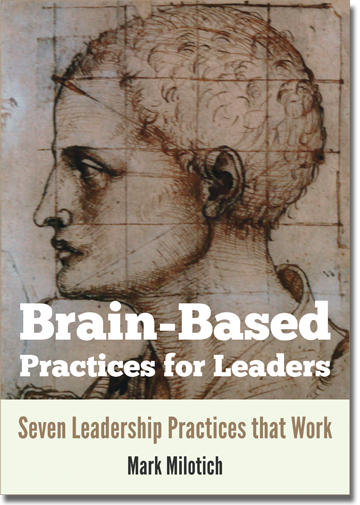
Chock full of the latest brain science to explain not just what you should do to be a great leader & manager but importantly—WHY.
Well thought out and researched, brilliantly structured and with great and positive advice.
Great read, direct and to the point. No fluff. Great for reference.
Interesting read. Simple approach.

Active Constructive Responding
How do you respond when someone tells you about something good that happened to them? Do you say “That’s great, congratulations!” while hurrying to your next meeting? If so, you are missing opportunities to build your relationships.

Kick the Urgency Habit
Perpetual busyness can propel us through our lives on autopilot, affecting our behavior, decisions, and relationships. When someone asks for my help and I say, “I’d like to help but I don’t have time,” what they hear me saying is, “Helping you is not my priority.” Read on to find out how you can kick the urgency habit.

On Gifts and Giving
According to Wharton Professor Adam Grant, givers often finish first. Grant’s research shows how givers—people who do more for others than they expect in return—rise in organizations.

Mental Simulations and Other Ways to Make Better Decisions
Do you follow a formalized process or framework for making decisions? Probably not. Although many of us are familiar with the decision-making process of understanding the problem, identifying and evaluating alternatives, then choosing the alternative with the highest rating, we usually don't go through all these steps. Instead, we use heuristics, rely on past results, or follow other people's actions.

Why Reflection Is Important
Reflection can help us improve performance through learning while at the same time increasing our sense of well-being. Reflection allows us to appreciate positive experiences. From schoolrooms to boardrooms, reflection is essential for learning, helping us to give meaning to our experience, learn from mistakes and increase purpose-driven action.

Create Time Abundance and Have the Time of Your Life
The only decision we make is how to spend our time. What we choose to do and who we choose to be with at any moment. Everything else in our life stems from this decision. What we achieve. What relationships we build. What skills we develop. We are the sum of what we choose to do with our time.

A Mind to Grow
Attitude matters. A lot. If you think you can improve with hard work, you can. If you believe performance is limited by talent or physical characteristics, it is. Both are true. Talent matters. Anatomy makes a difference. But with the right attitude, you can overcome the limits of natural ability.
-
Active Constructive Responding
How do you respond when someone tells you about something good that happened to them? Do you say “That’s great, congratulations!” while hurrying to your next meeting? If so, you are missing opportunities to build your relationships.
-
Kick the Urgency Habit
Perpetual busyness can propel us through our lives on autopilot, affecting our behavior, decisions, and relationships. When someone asks for my help and I say, “I’d like to help but I don’t have time,” what they hear me saying is, “Helping you is not my priority.” Read on to find out how you can kick the urgency habit.
-
On Gifts and Giving
According to Wharton Professor Adam Grant, givers often finish first. Grant’s research shows how givers—people who do more for others than they expect in return—rise in organizations.
-
Mental Simulations and Other Ways to Make Better Decisions
Do you follow a formalized process or framework for making decisions? Probably not. Although many of us are familiar with the decision-making process of understanding the problem, identifying and evaluating alternatives, then choosing the alternative with the highest rating, we usually don't go through all these steps. Instead, we use heuristics, rely on past results, or follow other people's actions.
-
Why Reflection Is Important
Reflection can help us improve performance through learning while at the same time increasing our sense of well-being. Reflection allows us to appreciate positive experiences. From schoolrooms to boardrooms, reflection is essential for learning, helping us to give meaning to our experience, learn from mistakes and increase purpose-driven action.