

Breaking Through the Local Optimum Trap
In today’s volatile business environment, the greatest risk isn’t making the wrong choice—it’s settling for merely good enough. Organizations (and individuals) often mistake incremental success for optimal performance, locking onto strategies that deliver steady results but miss transformational opportunities.

Facts don’t move people—peers do
In a data-driven world, it’s tempting to believe that providing rock‑solid facts will prompt people to change their attitudes and behaviors. But research tells a different story: people change because of people—especially peers, friends, and colleagues.

The illusion of correlation
Our brains are wired for pattern recognition. It’s an evolutionary trait that helped our ancestors survive (rustling grass = possible lion). Our ancestors rarely came to harm through false positives (they thought it was a lion, and it wasn’t), whereas the price for failing to recognize a link was high. Better to err on the side of caution than become lunch.

From Setback to Strength
Every leader faces moments that feel like a roadblock, when a crisis threatens to halt progress. However, these moments often look quite different with the benefit of hindsight. When viewed from the right perspective, what feels overwhelming now can become a turning point—sparking growth, innovation, and renewed commitment. As Carol Dweck puts it, “The view you adopt profoundly affects how you lead your life.”
-
Breaking Through the Local Optimum Trap
In today’s volatile business environment, the greatest risk isn’t making the wrong choice—it’s settling for merely good enough. Organizations (and individuals) often mistake incremental success for optimal performance, locking onto strategies that deliver steady results but miss transformational opportunities.
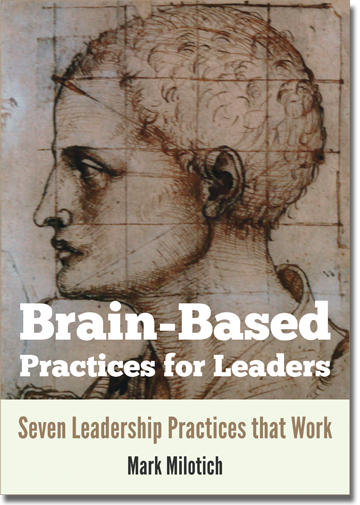
Chock full of the latest brain science to explain not just what you should do to be a great leader & manager but importantly—WHY.
Well thought out and researched, brilliantly structured and with great and positive advice.
Great read, direct and to the point. No fluff. Great for reference.

Bounce Back and Overcome Setbacks
The long-term consequences of an event (good or bad) are determined largely by our reaction to the event. This is good news. While we can’t control whether we experience bad events, we can learn to control our reaction to the events.
Rebuilding trust in your team
Trust is a leader’s most valuable asset. Building it takes time but losing it can happen in an instant. A broken promise, a lapse in judgment, or a careless email can quickly erode trust. When trust is broken, your response is crucial. Be ready to repair and rebuild.

How to keep the (team) fire burning
Are things going well for you and your team? Are your projects humming along? If so, congratulations. Would you like to know how to keep it so?

Kick the Urgency Habit
Perpetual busyness can propel us through our lives on autopilot, affecting our behavior, decisions, and relationships. When someone asks for my help and I say, “I’d like to help but I don’t have time,” what they hear me saying is, “Helping you is not my priority.” Read on to find out how you can kick the urgency habit.

Harnessing the Zeigarnik Effect for Productivity
Unfinished business—whether it’s an unsolved problem or a draft of an email—has a way of resurfacing at unexpected moments. This is known as the Zeigarnik effect. How can you put the Zeigarnik effect to work for you? Read on to find out.

The illusion of effortlessness
We like performance that looks effortless. Truth is that top performers work hard. They’ve evaluated more business plans, played more scales, sunk more layups, or painted more canvases than the rest of us. They’ve honed their skills through intentional learning and deliberate practice.

I Will—The Power of Public Commitments
You can influence a person’s future behavior by asking for a commitment and then waiting for them to give it. Making a commitment, however small, puts “skin in the game.” People want to act in ways that are consistent with what they have already said or done.
-
Bounce Back and Overcome Setbacks
The long-term consequences of an event (good or bad) are determined largely by our reaction to the event. This is good news. While we can’t control whether we experience bad events, we can learn to control our reaction to the events.
-
Rebuilding trust in your team
Trust is a leader’s most valuable asset. Building it takes time but losing it can happen in an instant. A broken promise, a lapse in judgment, or a careless email can quickly erode trust. When trust is broken, your response is crucial. Be ready to repair and rebuild.
-
How to keep the (team) fire burning
Are things going well for you and your team? Are your projects humming along? If so, congratulations. Would you like to know how to keep it so?
-
Kick the Urgency Habit
Perpetual busyness can propel us through our lives on autopilot, affecting our behavior, decisions, and relationships. When someone asks for my help and I say, “I’d like to help but I don’t have time,” what they hear me saying is, “Helping you is not my priority.” Read on to find out how you can kick the urgency habit.
-
Harnessing the Zeigarnik Effect for Productivity
Unfinished business—whether it’s an unsolved problem or a draft of an email—has a way of resurfacing at unexpected moments. This is known as the Zeigarnik effect. How can you put the Zeigarnik effect to work for you? Read on to find out.